
By MAJ (MDDF) Stephen Rice
Maryland Defense Force Public Affairs
26 May 2014
The Maryland Society of Professional Engineers (MDSPE) recently established the David Thaler Leadership Award in honor of Col. (MDDF) David S. Thaler of the Maryland Defense Force. This prestigious award will be presented to professional engineers who exemplify the leadership and ideals of Col. (MDDF) Thaler. This new honor will be given “only in very special instances where an individual whose leadership within the engineering community has been transformational and who has mobilized and unified people, organizations, or causes that improve the engineering profession” according to a MDSPE statement.
Col. (MDDF) David S. Thaler previously served within the 121st Engineering Regiment and currently serves as executive advisor to Brig. Gen. (MDDF) Brian R. Kelm, the commanding general of the MDDF. A civil engineer by profession, Col. (MDDF) Thaler is the president and managing principal of D.S. Thaler & Associates, Inc. a Baltimore based civil and environmental engineering firm. He also serves as a lecturer on land use policy as a visiting scholar at the University of Baltimore School of Law. In addition, Col. (MDDF) Thaler serves as a fellow with the American Society of Civil Engineers and the National Society of Professional Engineers.
Brig. Gen. (MDDF) Brian R. Kelm shared that “We are extremely proud of Col. (MDDF) Thaler and this special recognition he has received. He serves as a wonderful example of the depth and breadth of professional expertise that exists within the MDDF. Given the talent within our ranks, we remain positioned to fulfill our mission and support the State of Maryland when called.”
The Maryland Defense Force (MDDF) is the State’s uniformed volunteer military unit providing professional and technical assistance to the Maryland Military Department. Established in 1917, the MDDF consists of nearly 450 personnel who perform legal, engineering, finance, medical, chaplain, field support and ceremonial services for the State of Maryland. For more information: www.mddf.maryland.gov.
Monday, May 26, 2014
Sunday, May 4, 2014
The Maryland Defense Force Band Pays Tribute to 60 Years of Baseball in Baltimore
By CPT (MDDF) Richard Barnes
Maryland Defense Force Public Affairs
4 May 2014
Step right up. Get your popcorn, peanuts and crackerjack. The big game is about to start! Well, actually, the big concert about the big game was about to start. On Sunday, May 4th, the Maryland Defense Force (MDDF) Band performed an afternoon concert of music honoring America’s great pastime – baseball! The band was led by its founding commander, Lt. Col. (MDDF) Jari Villanueva, who is an avid baseball fan himself.

After performing our National Anthem to start the program, the MDDF Band played a sprightly march by the Finnish composer Timo Forsström entitled Castle Park and the Festival Overture on the American National Air by Dudley Buck. The themes contained in this complex overture for wind band were taken from The Star Spangled Banner as we celebrate the 200th anniversary of its composition by Francis Scott Key this year.
At the Dundalk United Methodist Church, the MDDF Band then celebrated 60 years of baseball in Baltimore. Almost all of the music performed by the band was centered on the theme of baseball. The band played such memorable selections as Take Me out to the Ballgame. America’s “March King,” John Philip Sousa, wrote a march dedicated to baseball entitled, The National Game, which the band performed with great precision. “Guest musician” Master Sgt. (retired) Jan Holland, formerly with The U.S. Army Field Band at Fort Meade, MD, assisted the MDDF Band by performing the harp as the band played themes from the baseball movie, The Natural. Lt. Col. (MDDF) Villanueva, a noted music historian in his own right, unearthed a march dedicated to the early days of Baltimore’s baseball team entitled, Our Orioles. This march was written at a time when baseball “fans” were referred to as baseball “cranks.”
Music from the Band’s woodwind ensemble delighted the audience as they brought the feeling of summer to the concert with a medley of Gay Nineties favorites by Bill Holcombe. The performance by this quintet of woodwind players included several well-known melodies including: A Bicycle Built for Two, The Sidewalks of New York, In the Good Old Summertime and the Band Played On.
The highlight of the afternoon, however, was the narration of the dramatic essay Casey at the Bat, which was presented by Brig. Gen. (MDDF) Brian R. Kelm, the commanding general of the Maryland Defense Force, accompanied by the band. Gen. (MDDF) Kelm’s enthusiastic interpretation of this perennial favorite definitely knocked this one “out of the park!”

The concert ended with a stirring rendition of Irving Berlin’s God Bless America and the Maryland Defense Force’s state service song, Maryland, My Maryland.
Widely known as “Maryland’s Musical Ambassadors,” the MDDF Band is a ceremonial unit of the Maryland Defense Force. Members of the band include retired and former members of our nation’s military service bands, music educators and students from all over the state. The band provides musical and ceremonial support to the Maryland Military Department and the State of Maryland. There are 22 states (plus the commonwealth of Puerto Rico) that have State Defense Forces to provide additional uniformed volunteer support to the National Guard. Of that number, Maryland is only one of two states to have a State Defense Force band.
The summer schedule of the MDDF Band for this year includes a concert at the amphitheater of Hagerstown Community College on Sunday, June 22nd at 6:15 p.m., participation in the Independence Day parade on the Fourth of July at 3:00 p.m. in Catonsville, a concert at the Lurman Woodland Theater in Catonsville on Saturday, July 19th at 6:30 p.m. and a concert at the Chesapeake Arts Center in Brooklyn Park on Saturday, September 22 at 7:30 p.m. All MDDF Band concerts are free and open to the public.
For more information about the band’s performances, contact the MDDF Band’s Public Affairs Officer, Capt. (MDDF) Rick Barnes, at rbarnes@mddf.us.
Maryland Defense Force Public Affairs
4 May 2014
Step right up. Get your popcorn, peanuts and crackerjack. The big game is about to start! Well, actually, the big concert about the big game was about to start. On Sunday, May 4th, the Maryland Defense Force (MDDF) Band performed an afternoon concert of music honoring America’s great pastime – baseball! The band was led by its founding commander, Lt. Col. (MDDF) Jari Villanueva, who is an avid baseball fan himself.

After performing our National Anthem to start the program, the MDDF Band played a sprightly march by the Finnish composer Timo Forsström entitled Castle Park and the Festival Overture on the American National Air by Dudley Buck. The themes contained in this complex overture for wind band were taken from The Star Spangled Banner as we celebrate the 200th anniversary of its composition by Francis Scott Key this year.
At the Dundalk United Methodist Church, the MDDF Band then celebrated 60 years of baseball in Baltimore. Almost all of the music performed by the band was centered on the theme of baseball. The band played such memorable selections as Take Me out to the Ballgame. America’s “March King,” John Philip Sousa, wrote a march dedicated to baseball entitled, The National Game, which the band performed with great precision. “Guest musician” Master Sgt. (retired) Jan Holland, formerly with The U.S. Army Field Band at Fort Meade, MD, assisted the MDDF Band by performing the harp as the band played themes from the baseball movie, The Natural. Lt. Col. (MDDF) Villanueva, a noted music historian in his own right, unearthed a march dedicated to the early days of Baltimore’s baseball team entitled, Our Orioles. This march was written at a time when baseball “fans” were referred to as baseball “cranks.”
Music from the Band’s woodwind ensemble delighted the audience as they brought the feeling of summer to the concert with a medley of Gay Nineties favorites by Bill Holcombe. The performance by this quintet of woodwind players included several well-known melodies including: A Bicycle Built for Two, The Sidewalks of New York, In the Good Old Summertime and the Band Played On.
The highlight of the afternoon, however, was the narration of the dramatic essay Casey at the Bat, which was presented by Brig. Gen. (MDDF) Brian R. Kelm, the commanding general of the Maryland Defense Force, accompanied by the band. Gen. (MDDF) Kelm’s enthusiastic interpretation of this perennial favorite definitely knocked this one “out of the park!”

The concert ended with a stirring rendition of Irving Berlin’s God Bless America and the Maryland Defense Force’s state service song, Maryland, My Maryland.
Widely known as “Maryland’s Musical Ambassadors,” the MDDF Band is a ceremonial unit of the Maryland Defense Force. Members of the band include retired and former members of our nation’s military service bands, music educators and students from all over the state. The band provides musical and ceremonial support to the Maryland Military Department and the State of Maryland. There are 22 states (plus the commonwealth of Puerto Rico) that have State Defense Forces to provide additional uniformed volunteer support to the National Guard. Of that number, Maryland is only one of two states to have a State Defense Force band.
The summer schedule of the MDDF Band for this year includes a concert at the amphitheater of Hagerstown Community College on Sunday, June 22nd at 6:15 p.m., participation in the Independence Day parade on the Fourth of July at 3:00 p.m. in Catonsville, a concert at the Lurman Woodland Theater in Catonsville on Saturday, July 19th at 6:30 p.m. and a concert at the Chesapeake Arts Center in Brooklyn Park on Saturday, September 22 at 7:30 p.m. All MDDF Band concerts are free and open to the public.
For more information about the band’s performances, contact the MDDF Band’s Public Affairs Officer, Capt. (MDDF) Rick Barnes, at rbarnes@mddf.us.

Saturday, May 3, 2014
Maryland Adjutant General Addresses MDDF at 2014 Annual Muster
By MAJ (MDDF) Stephen Rice
Maryland Defense Force Public Affairs
3 May 2014
On May 3, 2014 the Maryland Defense Force (MDDF) held its Annual Muster at the Pikesville Military Reservation. The Annual Muster is a mandatory all day training activity for all Maryland Defense Force personnel. Company formation and ceremonies commenced at 9:00 a.m. The keynote speaker for this year’s muster was Maj. Gen. James A. Adkins, the adjutant general of Maryland.

Maj. Gen. Adkins is the 28th adjutant general of Maryland and has served in that role since 2008. As Maryland’s adjutant general, he manages the operations of the Maryland Military Department (MILDEP) which includes the Maryland Army National Guard (MDARNG), the Maryland Air National Guard (MDANG), the Maryland Emergency Management Agency (MEMA) and the Maryland Defense Force (MDDF). Maj. Gen. Adkins also serves as a senior advisor to the governor while overseeing a state department of more than 7,200 military and civilian personnel.

Maj. Gen. Adkins’ military career includes more than 30 years of service in both the enlisted and officer ranks. He has served in various staff assignments and at almost every level of command. His distinguished service includes assignments in intelligence, infantry and cavalry units in the United States and overseas. Some of his many military decorations include the Legion of Merit, the Maryland Distinguished Service Cross and the Order of the White Cross from the Republic of Estonia.

Brig. Gen. (MDDF) Brian R. Kelm, the commanding general of the Maryland Defense Force shared that, “It is always an honor for the MDDF to host Gen. Adkins at our annual muster. His leadership and career of selfless service is an inspiration to our state soldiers. He thanked us for the volunteer work that we do but we also appreciate his stewardship and professional example.”
The Maryland Defense Force (MDDF) is the State’s uniformed volunteer military unit providing professional and technical assistance to the Maryland Military Department. Established in 1917, the MDDF consists of nearly 450 personnel who perform legal, engineering, finance, medical, chaplain, field support and ceremonial services for the State of Maryland. For more information: www.mddf.maryland.gov.
Maryland Defense Force Public Affairs
3 May 2014
On May 3, 2014 the Maryland Defense Force (MDDF) held its Annual Muster at the Pikesville Military Reservation. The Annual Muster is a mandatory all day training activity for all Maryland Defense Force personnel. Company formation and ceremonies commenced at 9:00 a.m. The keynote speaker for this year’s muster was Maj. Gen. James A. Adkins, the adjutant general of Maryland.

Maj. Gen. Adkins is the 28th adjutant general of Maryland and has served in that role since 2008. As Maryland’s adjutant general, he manages the operations of the Maryland Military Department (MILDEP) which includes the Maryland Army National Guard (MDARNG), the Maryland Air National Guard (MDANG), the Maryland Emergency Management Agency (MEMA) and the Maryland Defense Force (MDDF). Maj. Gen. Adkins also serves as a senior advisor to the governor while overseeing a state department of more than 7,200 military and civilian personnel.

Maj. Gen. Adkins’ military career includes more than 30 years of service in both the enlisted and officer ranks. He has served in various staff assignments and at almost every level of command. His distinguished service includes assignments in intelligence, infantry and cavalry units in the United States and overseas. Some of his many military decorations include the Legion of Merit, the Maryland Distinguished Service Cross and the Order of the White Cross from the Republic of Estonia.
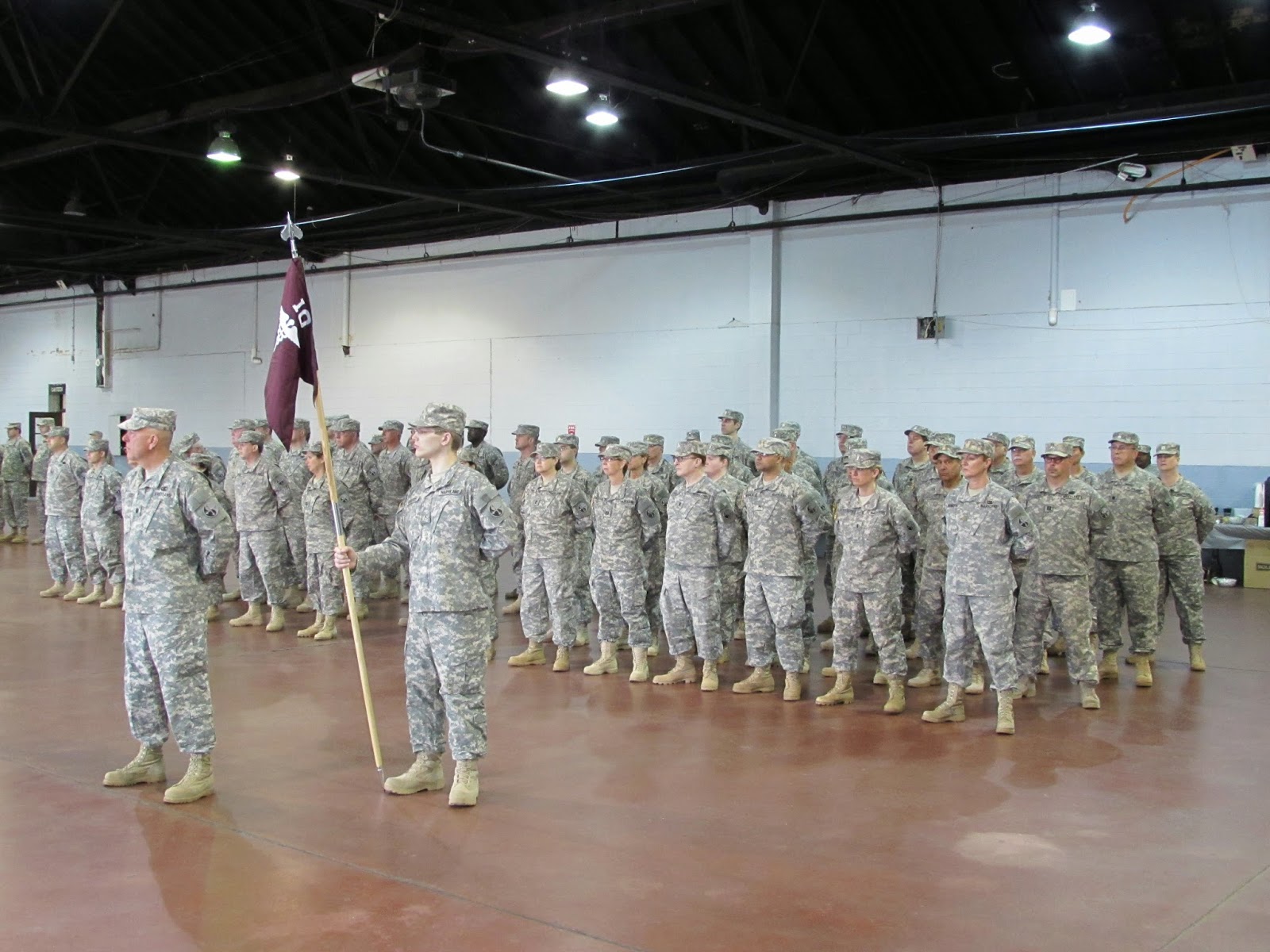
Brig. Gen. (MDDF) Brian R. Kelm, the commanding general of the Maryland Defense Force shared that, “It is always an honor for the MDDF to host Gen. Adkins at our annual muster. His leadership and career of selfless service is an inspiration to our state soldiers. He thanked us for the volunteer work that we do but we also appreciate his stewardship and professional example.”
The Maryland Defense Force (MDDF) is the State’s uniformed volunteer military unit providing professional and technical assistance to the Maryland Military Department. Established in 1917, the MDDF consists of nearly 450 personnel who perform legal, engineering, finance, medical, chaplain, field support and ceremonial services for the State of Maryland. For more information: www.mddf.maryland.gov.
Wednesday, April 23, 2014
MDDF Supports 2014 Mid-Atlantic Collegiate Cyber Defense Competition
By COL (MDDF) Gary Stoneburner
23 April 2014
The Maryland Defense Force (MDDF) led a multi-component military unit in support of the National CyberWatch Center’s 2014 Mid-Atlantic Collegiate Cyber Defense Competition (MACCDC) hosted by the Johns Hopkins University Applied Physics Laboratory in Laurel, Maryland. The competition held during March 28th and 29th was the mid-Atlantic regional event of a national competition whose sponsors include the U.S. Department of Homeland Security (DHS), the Maryland Department of Business and Economic Development, the National Science Foundation, the US Army Intelligence and Security Command (INSCOM), and the US Navy Space and Naval Warfare Systems Command (SPAWAR). In its ninth year, this event allowed college students in cyber related fields to test their experience and training by defending against a highly-capable team of cyber attackers.
This year’s competition scenario had eight area college teams. Each team defended their own computer network simulating the information technology essential for county aid distribution as part of Maryland’s emergency response to a devastating blizzard. Responding to the simulated devastation was compounded by a simulated cyber attack by a fictitious terrorist organization. The teams were scored in large part on their ability to keep their network operational despite cyber attacks. An outstanding group of cybersecurity professionals served during the competition as the red team simulating the “terrorist hackers.”
Col. (MDDF) Gary Stoneburner, the MDDF Chief Information Officer and Assistant Chief of Staff for Information Technology and Communications, led the military team comprised of members of the MDDF, the Maryland Army National Guard (MDARNG) Computer Network Defense team, the Maryland Air National Guard (MDANG) Cyber Warfare Squadron, and US Navy reservists with SPAWAR. The military team established a simulated Maryland Military Department (MILDEP) Computer Defense Operation Center (CDOC) that worked with the college teams in defending their emergency management networks as the notional CDOC might assist Maryland state agencies in responding to cyber attacks. Col. (MDDF) Stoneburner, commented that, “The exercise was a great learning opportunity for the college students as future cyber professionals and it also served as an outstanding training opportunity for our military team.” “We look forward to participating in this event for many years to come.”
The Maryland Defense Force (MDDF) is the State’s uniformed volunteer military unit providing professional and technical assistance to the Maryland Military Department. Established in 1917, the MDDF consists of nearly 450 personnel who perform legal, engineering, communications, cyber security, information technology, finance, medical, chaplain, field support, and ceremonial services for the State of Maryland. For more information: www.mddf.maryland.gov.
23 April 2014
The Maryland Defense Force (MDDF) led a multi-component military unit in support of the National CyberWatch Center’s 2014 Mid-Atlantic Collegiate Cyber Defense Competition (MACCDC) hosted by the Johns Hopkins University Applied Physics Laboratory in Laurel, Maryland. The competition held during March 28th and 29th was the mid-Atlantic regional event of a national competition whose sponsors include the U.S. Department of Homeland Security (DHS), the Maryland Department of Business and Economic Development, the National Science Foundation, the US Army Intelligence and Security Command (INSCOM), and the US Navy Space and Naval Warfare Systems Command (SPAWAR). In its ninth year, this event allowed college students in cyber related fields to test their experience and training by defending against a highly-capable team of cyber attackers.
This year’s competition scenario had eight area college teams. Each team defended their own computer network simulating the information technology essential for county aid distribution as part of Maryland’s emergency response to a devastating blizzard. Responding to the simulated devastation was compounded by a simulated cyber attack by a fictitious terrorist organization. The teams were scored in large part on their ability to keep their network operational despite cyber attacks. An outstanding group of cybersecurity professionals served during the competition as the red team simulating the “terrorist hackers.”
Col. (MDDF) Gary Stoneburner, the MDDF Chief Information Officer and Assistant Chief of Staff for Information Technology and Communications, led the military team comprised of members of the MDDF, the Maryland Army National Guard (MDARNG) Computer Network Defense team, the Maryland Air National Guard (MDANG) Cyber Warfare Squadron, and US Navy reservists with SPAWAR. The military team established a simulated Maryland Military Department (MILDEP) Computer Defense Operation Center (CDOC) that worked with the college teams in defending their emergency management networks as the notional CDOC might assist Maryland state agencies in responding to cyber attacks. Col. (MDDF) Stoneburner, commented that, “The exercise was a great learning opportunity for the college students as future cyber professionals and it also served as an outstanding training opportunity for our military team.” “We look forward to participating in this event for many years to come.”
The Maryland Defense Force (MDDF) is the State’s uniformed volunteer military unit providing professional and technical assistance to the Maryland Military Department. Established in 1917, the MDDF consists of nearly 450 personnel who perform legal, engineering, communications, cyber security, information technology, finance, medical, chaplain, field support, and ceremonial services for the State of Maryland. For more information: www.mddf.maryland.gov.
Tuesday, April 15, 2014
MDDF Holds Military Emergency Management Specialist (MEMS) Graduation Ceremony
By MAJ (MDDF) Stephen Rice
Maryland Defense Force Public Affairs
15 April 2014
The Maryland Defense Force (MDDF) held a ceremony on April 12, 2014 for recent graduates of the Military Emergency Management Specialist (MEMS) Academy, managed by the State Guard Association of the United States (SGAUS). The ceremony was sponsored by the Maryland State Guard Association. Graduates of the academy are authorized to wear the MEMS Specialist badge on the uniform. The Basic MEMS Specialist, Senior MEMS Specialist and Master MEMS Specialist badges were awarded at the ceremony based upon the training level that was completed by the individual MDDF volunteer.
 The MEMS training qualification program prepares state military volunteers to “effectively operate and function in local or statewide military emergency management mobilizations,” according to SGAUS. After earning the Basic MEMS Specialist badge, the volunteer should be able to effectively operate in an emergency operations center. A recipient of the Senior MEMS Specialist Badge should also be able to work effectively in a joint operations center. A recipient of the Master MEMS Specialist Badge must participate in a capstone course, train other specialists and receive advanced emergency management training.
At the ceremony there were nineteen recipients of the Basic MEMS Specialist Badge, two recipients of the Senior MEMS Specialist Badge and the sole recipient of the Master MEMS Specialist Badge was Col. (MDDF) John B. Carter. Col. (MDDF) Michael Barrett, President of the Maryland State Guard Association served as the master of ceremonies. Tom Gilboy, who formerly served as the Director of the Emergency Management Professional Program at the Federal Emergency Management Agency (FEMA) served as the keynote speaker. He shared important insights and career advice from his lengthy and rewarding emergency management career.
Brig. Gen. (MDDF) Brian R. Kelm, the commanding general of the MDDF stated that, “The MEMS qualification badge training is the core of our mission and purpose as a state military organization. We need to be able to effectively support our state in an emergency. I would like to see all of our volunteers get the required training and earn this badge.”
The Maryland Defense Force (MDDF) is the State’s uniformed volunteer military unit providing professional and technical assistance to the Maryland Military Department. Established in 1917, the MDDF consists of nearly 450 personnel who perform legal, engineering, finance, medical, chaplain, field support and ceremonial services for the State of Maryland. For more information: www.mddf.maryland.gov.
Maryland Defense Force Public Affairs
15 April 2014
The Maryland Defense Force (MDDF) held a ceremony on April 12, 2014 for recent graduates of the Military Emergency Management Specialist (MEMS) Academy, managed by the State Guard Association of the United States (SGAUS). The ceremony was sponsored by the Maryland State Guard Association. Graduates of the academy are authorized to wear the MEMS Specialist badge on the uniform. The Basic MEMS Specialist, Senior MEMS Specialist and Master MEMS Specialist badges were awarded at the ceremony based upon the training level that was completed by the individual MDDF volunteer.

At the ceremony there were nineteen recipients of the Basic MEMS Specialist Badge, two recipients of the Senior MEMS Specialist Badge and the sole recipient of the Master MEMS Specialist Badge was Col. (MDDF) John B. Carter. Col. (MDDF) Michael Barrett, President of the Maryland State Guard Association served as the master of ceremonies. Tom Gilboy, who formerly served as the Director of the Emergency Management Professional Program at the Federal Emergency Management Agency (FEMA) served as the keynote speaker. He shared important insights and career advice from his lengthy and rewarding emergency management career.
Brig. Gen. (MDDF) Brian R. Kelm, the commanding general of the MDDF stated that, “The MEMS qualification badge training is the core of our mission and purpose as a state military organization. We need to be able to effectively support our state in an emergency. I would like to see all of our volunteers get the required training and earn this badge.”
The Maryland Defense Force (MDDF) is the State’s uniformed volunteer military unit providing professional and technical assistance to the Maryland Military Department. Established in 1917, the MDDF consists of nearly 450 personnel who perform legal, engineering, finance, medical, chaplain, field support and ceremonial services for the State of Maryland. For more information: www.mddf.maryland.gov.
Sunday, March 30, 2014
Military Law
By LTC (MDDF) David P. Weber
Maryland Defense Force Judge Advocate Corps
30 March 2014
This article originally appeared in the March/April 2014 edition of the Maryland Bar Journal and is reproduced by permission of the Maryland State Bar Association.
An incoming hurricane on the Eastern Shore; a blackout and heat wave in Baltimore City; erection of a mobile field hospital in response to a potential mass-casualty event; legal advice to state leaders, National Guardsmen, and veterans. These are examples of the varied roles of the Maryland Defense Force, formerly known as the Maryland State Guard.
The Maryland Defense Force, first created in 1917, is a uniformed military agency authorized by federal and Maryland law, and forms one of the subordinate agencies of the Maryland Military Department. See 32 U.S.C. § 109; Md. Public Safety Code Ann. §§ 13-203, 501 et seq. Except when called to active duty for state emergency or other service by order of the Governor, Maryland Defense Force soldiers are uncompensated and serve as volunteers, providing highly technical and professional services to the State of Maryland, its citizens, and the Maryland Army National Guard and the Maryland Air National Guard. When called to active state service by the Governor, however, Maryland law provides for compensation of Defense Force personnel at the discretion of the Governor, and provides that they may receive the same pay and allowances as a person of like grade and length of service in the armed forces of the United States. See Md. Public Safety Code Ann. § 13-704.
Maryland Defense Force officers are commissioned by the Maryland Governor, and serve at the Governor ’s pleasure. See Md. Public Safety Code Ann. § 13-601. Many of the officers in the Maryland Defense Force are veterans, former officers, or graduates of the U.S. military academies. A number of Maryland Defense Force members are combat veterans of the wars in Vietnam, Iraq, and Afghanistan.
The Maryland Defense Force serves the Governor under the direction and supervision of the State Adjutant General, Major General James A. Adkins, who also commands the Maryland Army National Guard and Air National Guard, as well as the Maryland Emergency Management Agency. The current Commanding General of the Maryland Defense Force (MDDF) is Brigadier General Brian R. Kelm, a 26-year veteran of the Civil Engineer Corps of the U.S. Navy.
Nearly every state has laws authorizing state defense forces. Today, 22 states and Puerto Rico have active state defense forces with different levels of activity, support, and strength. Most state defense forces, including Maryland’s, are organized as army units, but air and naval units also exist. Individual states have tasked their defense forces with different missions.
In Maryland, the Defense Force mission is to provide competent supplemental professional and technical support to the Maryland Military Department, including the Army National Guard, Air National Guard, and Maryland Emergency Management Agency as required. Unlike Maryland National Guardsmen, Maryland Defense Force soldiers serve at the discretion of the Governor for state missions and may not be federalized and sent to an overseas war (although individual soldiers remain subject to federal draft requirements). On limited occasions, Maryland Defense Force soldiers may be sent out of state at the request of a neighboring governor requesting assistance. Recent examples of such assistance include the deployment of Maryland Defense Force soldiers to Louisiana after Hurricane Katrina in 2005, as well as components of the Defense Force being deployed to South Dakota Indian reservations in 2007 for a public health mission.
In Maryland, however, calls to state active duty are rare. When not called to active duty, professional and technical support to the Maryland Military Department is the core of the Defense Force mission. Professional and technical services include:
Legal Services – the Judge Advocate Corps
Judge Advocates in the Maryland Defense Force ensure legal representation and coverage for every National Guard soldier and airman in the state. They also as provide legal advice and support to the Defense Force command and the commands of the Army National Guard and Air National Guard. The forty-three Judge Advocates of the Defense Force are each admitted to practice law within Maryland, and many are admitted in other states as well. Many Judge Advocates are former U.S. military officers. Current Maryland Judge Advocates include, among others, the retired Chief Judge of the United States District Court for the District of Maryland; an Administrative Law Judge of the Maryland Office of Administrative Hearings; a former Commissioner of the Maryland Workers Compensation Commission; the former Assistant Inspector General for Investigations of a major federal agency; former Assistant States Attorneys; current federal civilian attorneys; a current attorney for a Maryland county agency; numerous partners and associates at Maryland and DC-area law firms; as well as many sole practitioners engaged in criminal, civil and family law. A number of Judge Advocates have served in combat overseas. At least once per year, Maryland Defense Force Judge Advocates join with their Army and Air National Guard attorney counterparts in joint training to ensure that all elements of the Maryland Military Department are able to work together in a coordinated fashion, even during times of crisis. Maryland Judge Advocates serve as staff legal support to the Defense Force command, as well as to individual Army and Air Guard units throughout the state. Such activities may include providing support to the state’s military justice system (including the provision under state law for courts martial), as well as preventative legal training and lectures to soldiers and airmen. In addition, Judge Advocates provide local coverage and assistance to individual National Guard members in need, such as the preparation of wills and powers of attorney, family law and custody disputes, eviction or foreclosure defense, employment law issues with civilian employers, and assisting returning service members with claims for benefits from the Veterans Administration. Legal entanglements have become especially acute as Maryland National Guardsmen have been called to service due to the conflicts overseas in numbers not seen since World War II. Judge Advocates, in turn, derive substantial rewards in being able to assist members of our military. In addition, service to the Defense Force and to individual guardsmen and their families may be reported as pro bono hours to the Maryland Court of Appeals.
Chaplain Services
A dedicated Chaplain Corps provides religious guidance and counseling to Maryland Guardsmen and their families, as well as the community at large, during times of need or crises. Chaplains in the Defense Force are frequently embedded in specific units of the National Guard, and at times may be the only pastoral services a federalized Guardsman may see prior to deployment.
Medical Services
The Defense Force’s 10th Medical Regiment (a unit designation linking it to its historic World War II state guard roots) is unique among state defense forces, including its capability to fully erect, supply, staff and run a mobile field hospital. The soldiers of the 10th Medical Regiment include surgeons, internists, pediatricians, psychiatrists, psychologists, social workers, pharmacists, registered nurses and certified nurse practitioners, emergency medical technicians,as well as associated medical specialties. In recent memory, the Regiment’s largest deployment was in Operation Lifeline Depot. The Maryland Defense Force-led task force, comprising more than 200 health professionals, eventually treated over 6,500 patients in five abandoned facilities in Jefferson Parish, Louisiana, in the immediate aftermath of Hurricane Katrina.
Engineering Services
The Maryland Defense Force 121st Engineer Regiment provides a professional organized, trained, disciplined and uniformed rapid response force of engineers of all disciplines to assist the Maryland Military Department, state and local government agencies, and civil relief organizations in response to any impending or actual emergency. The mission of the 121st Engineer Regiment consists of inspection and assessment of Maryland Army National Guard facilities. Other mission support areas consists of internal engineer support to the Defense Force, disaster assessment after a natural or manmade incident, and the assessment of critical infrastructure prior to a disaster.
Finance Corps
Individuals in the Finance Corps are professionals in the fields of banking, investment management, accounting, and insurance. Their skills are put to use counseling Maryland National Guard and Air National Guard members and their families on personal finance, college savings, investment and retirement strategies, insurance, and taxes.
Information Technology & Communications
The Information Technology and Communications Directorate works to provide the Defense Force with secure and assured information technology and communication services. It is staffed with experienced IT professionals that work in many areas of the IT and communications fields.
Cyber Security
The Cyber Security Unit provides professional, civilian-military expertise in cyber security to the Maryland Military Department and state and local agencies as a service and assistance to their own cyber security programs. During cyber emergencies, the Defense Force Cyber Security Unit will provide expertise to restore systems to normal operation.
Cavalry Troop A and the Maryland Defense Force Band
The Maryland Defense Force Cavalry Troop A provides the Maryland Military Department with a ceremonial unit that is a visible link to Maryland’s many horse cavalry units of the past, while supporting recruiting and public relations efforts of both the National Guard and Defense Force. The Maryland Defense Force Band provides musical support for the Defense Force, support for the 229th Army Band, and supplemental professional musical support to the Maryland Military Department and the Maryland National Guard. The Defense Force Band enhances community relations, general recruitment, and troop morale. Its goal is to communicate the mission of the Maryland Defense Force and the duties it performs for the Maryland Military Department.
History of the Maryland Defense Force
Formally established by the Maryland legislature in 1917, the Maryland Defense Force proudly traces its heritage and tradition back to the 17th Century. That inherited spirit of service gave birth to the Maryland State Guard during both World Wars and is the origin of the Maryland Defense Force.
World War I
On April 6, 1917, Congress declared war on Imperial Germany and her allies and entered the Great War raging on the European Continent. President Wilson called upon the National Guard units of Maryland for service overseas in Europe. The people of Maryland and the Governor consequently lost control of the only organized and trained defensive body at their disposal,leaving the state open to acts of aggression, unrest, and disaster. In response, the Maryland General Assembly unanimously passed the State Guard Bill (S.B.12), legally authorizing the Governor to: recruit (through volunteering or draft), equip, train and otherwise maintain a body of armed troops within this State, to be known as the Maryland State Guard and, empowered the Governor to call the State Guard into active State service when the public interest and safety require. Maryland’s citizens responded to a call to service and filled the vacant armories in and around Baltimore, Hagerstown, Frederick, Salisbury, and Annapolis. Nine companies totaling 34 officers and 518 men turned out twice-weekly to drill and train. The State Guardsmen did turn out for active duty twice, in 1919, to keep the peace during controversial criminal trials in Annapolis and Easton. As quickly as the State Guard came, it went, officially disbanding on March 1, 1920, making way for the Maryland National Guard to return to their armories.
World War II
In September 1940, Congress, responding to the growing threat and possibility of involvement in combat operations against the forces of Germany and Japan, again inducted the National Guard troops of the 48 states into federal service. Once again facing the need for an active, trained, and properly equipped force capable of patrolling and providing a competent response to emergencies in the absence of the National Guard, Maryland passed the State Guard Act on February 14, 1941. The Act expanded and defined the role of the State Guard with greater authority and responsibility in case of activation and detailed a mission of service “in case of insurrection, invasion, tumult, riot, breach of peace or imminent danger thereof, or to enforce the laws of this state with all the authority of sheriffs and deputy sheriffs.” The authority of a soldier of the Maryland Defense Force called to service in active duty remains similar today: to possess “all the authority of a peace or law enforcement officer.” Md. Public Safety Code Ann. § 13-702(c)(1). Because the civilian employees that made up the State Guard could not be placed on patrol duty for the indefinite duration of the war, a Special Military Police unit of the Maryland State Guard consisting of 324 officers and men was established on January 9, 1942. By then, the State Guard consisted of: the brigade headquarters company; a radio section; a chemical warfare section; eight infantry battalions; one engineer battalion; one medical battalion; one special military police unit and an African-American battalion. Muster roles place membership at a high of 2,731 officers and enlisted men enrolled on the muster books for 1944. From October 2, 1941, to August 15, 1945, the Maryland State Guard was called out on 11 separate occasions around the state from Elkton to Cumberland, in addition to the constant patrolling by the Special Military Police unit. State Guardsmen were (and still are) compensated with pay as their National Guard counterparts when on active duty. By 1947, the last of the Maryland State Guard formations of World War II were disbanded, and once again the role of state defense was returned to the established National Guard units. During the ensuing Cold War, a variety of federal and state legislative efforts grappled with the need for additional state troops and to define their role and purpose.
Expanded Role of the National Guard
The “Total Force” doctrine adopted by the U.S. Army in 1970 expanded the role that National Guard troops would play in future Army deployment plans. If rapid expansion and deployment of force was necessary, Reserve and National Guard units would be called upon first, before the Army turned to a draft to supplement its strength. National Guard units were called upon to change their mission to adopt key logistical and security support roles such as vehicle maintenance and military police functions. This plan was demonstrated in the rapid activation of many National Guard support units in the First Gulf War and worked well. The states that contributed these units recognized that a rapid call up of their National Guard forces left a defense deficit at home, a void that needed to be supplemented in their own right. During the spring 1983 legislative session, Maryland took advantage of federal changes made in 1958 to the language of the National Defense Act of 1916, allowing states to voluntarily maintain forces of their own in times of peace, and passed a reactivation of the State code establishing the Maryland Defense Force on July 1, 1983. By 1995, more than 20 states had revitalized and organized their state defense units to fill the state defense void. In 1994, the Maryland Defense Force was tasked with armory staffing; possible suppression of terrorism; search and rescue;and disaster relief. The September 11, 2001, terrorist attacks and the subsequent War on Terrorism crystallized a need for layered state defenses and support organizations and tasked the Maryland Defense Force with a new mission: “To provide competent supplemental professional and technical support to the Maryland Military Department as required.” Col. Michael Osborn, Ready When Called: The Maryland Defense Force, Maryland Bar Journal November/ December 2007, at 15, 16.
Legal Basis of the Maryland Defense Force
At present, the legal basis for the Maryland Defense Force is contained in 32 U.S.C. §109 and the State Militia Law, which is contained in Title 13 of the Public Safety Article of the Maryland Code. The basic regulation governing criteria and guidance for administration, operations, and training for the Maryland Defense Force is Maryland Military Regulation 1-12 (August 2011). Federal law provides that in time of peace any state or territory including the District of Columbia may maintain no troops other than those of the National Guard and the Defense Forces authorized by Title 32 of the United States Code. Section 109 states: In addition to its National Guard, if any, a state or territory, Puerto Rico, The Virgin Islands, or the District of Columbia may, as provided by its laws, organize and maintain defense forces. A defense force established under this section may be used within the jurisdiction concerned, as its chief executive (or commanding general in the case of the District of Columbia) considers necessary, but it may not be called, ordered, or drafted into the Armed Forces. Maryland Defense Force soldiers are considered “state personnel,” while on duty or training, even if they are serving in a non-active duty (volunteer) capacity. See 81 Op, Atty. Gen. Md. 121 (1996). In addition, soldiers are overed for workers compensation, in the event of a service-related injury, during state active duty or in training. See Md. Public Safety Code Ann. § 13-210.
The Maryland Judge Advocate Corps is Looking for a Few Good Men and Women
Maryland Defense Force lawyers have provided thousands of hours of pro bono support to Maryland citizens, National Guard soldiers and airmen, and their families. Often, this support is in the form of rushing to court on short notice to seek a stay of proceedings for a deployed guardsman. Some examples of legal matters in which Defense Force lawyers have become involved include:
• Estate and probate support to families left behind when a guardsman is killed in action;
• Establishing guardianship when a soldier is injured such that she or he is unable to participate in his or her own care, property or financial decisions;
• Intervention in family law matters involving separation and divorce, custody, child support, visitation, parental rights or property division;
• Intervention against debt collection efforts by creditors against deployed soldiers or airmen;
• Pursuit of, or defense against, home improvement contractors, service providers or others who seek to retain funds from guardsmen;
• Employment and reemployment disputes upon the return home of deployed guardsmen;
• Real estate disputes, including title, deposits, improvements, quiet use or eviction;
• Bankruptcy qualification, discharge or renegotiation of debt;
• Public school enrollment, services to special needs children, expulsion, qualification for in-state college tuition and fees at Maryland institutions;
• Certifying children and, at times, parents, as dependents so they may qualify for medical care at military treatment facilities run by the federal government;
• Immigration and naturalization concerns;
• Motor vehicle title, registration and insurance coverage issues;
• Qualification of veterans’ or military associations as IRS section 501(c) organizations; and
• Tax issues, both federal and state.
As previously noted, in addition to legal support to guardsmen and their families, Judge Advocates also represent the command. In doing so, they provide assistance to commanders in matters relating to the state military justice system, organization, personnel, statutory and regulatory interpretation, orders for duty out of state, and training. While many Defense Force attorneys have prior military experience, prior service is not a prerequisite for commission as a Judge Advocate. The only real prerequisite is a sincere desire to assist soldiers and airmen, their families, and the citizens of Maryland. The need for Maryland Judge Advocates is most acute in the areas of family law, consumer protection, real estate, creditor-debtor rights, and military and veteran’s assistance. To learn more – or to volunteer – please visit http://mddf.maryland.gov.
Mr. Weber is a Lieutenant Colonel and Judge Advocate in the Maryland Defense Force and a member of the boutique law firm of Goodwin Weber PLLC. He gratefully acknowledges the support and assistance of the Honorable Michael R. Osborn, Administrative Law Judge, Maryland Office of Administrative Hearings (and retired U.S. Marine Corps and Maryland Defense Force Colonel) in preparing this article. For military matters, he may be reached at dweber@mddf.maryland.gov.
Maryland Defense Force Judge Advocate Corps
30 March 2014
This article originally appeared in the March/April 2014 edition of the Maryland Bar Journal and is reproduced by permission of the Maryland State Bar Association.
An incoming hurricane on the Eastern Shore; a blackout and heat wave in Baltimore City; erection of a mobile field hospital in response to a potential mass-casualty event; legal advice to state leaders, National Guardsmen, and veterans. These are examples of the varied roles of the Maryland Defense Force, formerly known as the Maryland State Guard.
The Maryland Defense Force, first created in 1917, is a uniformed military agency authorized by federal and Maryland law, and forms one of the subordinate agencies of the Maryland Military Department. See 32 U.S.C. § 109; Md. Public Safety Code Ann. §§ 13-203, 501 et seq. Except when called to active duty for state emergency or other service by order of the Governor, Maryland Defense Force soldiers are uncompensated and serve as volunteers, providing highly technical and professional services to the State of Maryland, its citizens, and the Maryland Army National Guard and the Maryland Air National Guard. When called to active state service by the Governor, however, Maryland law provides for compensation of Defense Force personnel at the discretion of the Governor, and provides that they may receive the same pay and allowances as a person of like grade and length of service in the armed forces of the United States. See Md. Public Safety Code Ann. § 13-704.
Maryland Defense Force officers are commissioned by the Maryland Governor, and serve at the Governor ’s pleasure. See Md. Public Safety Code Ann. § 13-601. Many of the officers in the Maryland Defense Force are veterans, former officers, or graduates of the U.S. military academies. A number of Maryland Defense Force members are combat veterans of the wars in Vietnam, Iraq, and Afghanistan.
The Maryland Defense Force serves the Governor under the direction and supervision of the State Adjutant General, Major General James A. Adkins, who also commands the Maryland Army National Guard and Air National Guard, as well as the Maryland Emergency Management Agency. The current Commanding General of the Maryland Defense Force (MDDF) is Brigadier General Brian R. Kelm, a 26-year veteran of the Civil Engineer Corps of the U.S. Navy.
Nearly every state has laws authorizing state defense forces. Today, 22 states and Puerto Rico have active state defense forces with different levels of activity, support, and strength. Most state defense forces, including Maryland’s, are organized as army units, but air and naval units also exist. Individual states have tasked their defense forces with different missions.
In Maryland, the Defense Force mission is to provide competent supplemental professional and technical support to the Maryland Military Department, including the Army National Guard, Air National Guard, and Maryland Emergency Management Agency as required. Unlike Maryland National Guardsmen, Maryland Defense Force soldiers serve at the discretion of the Governor for state missions and may not be federalized and sent to an overseas war (although individual soldiers remain subject to federal draft requirements). On limited occasions, Maryland Defense Force soldiers may be sent out of state at the request of a neighboring governor requesting assistance. Recent examples of such assistance include the deployment of Maryland Defense Force soldiers to Louisiana after Hurricane Katrina in 2005, as well as components of the Defense Force being deployed to South Dakota Indian reservations in 2007 for a public health mission.
In Maryland, however, calls to state active duty are rare. When not called to active duty, professional and technical support to the Maryland Military Department is the core of the Defense Force mission. Professional and technical services include:
Legal Services – the Judge Advocate Corps
Judge Advocates in the Maryland Defense Force ensure legal representation and coverage for every National Guard soldier and airman in the state. They also as provide legal advice and support to the Defense Force command and the commands of the Army National Guard and Air National Guard. The forty-three Judge Advocates of the Defense Force are each admitted to practice law within Maryland, and many are admitted in other states as well. Many Judge Advocates are former U.S. military officers. Current Maryland Judge Advocates include, among others, the retired Chief Judge of the United States District Court for the District of Maryland; an Administrative Law Judge of the Maryland Office of Administrative Hearings; a former Commissioner of the Maryland Workers Compensation Commission; the former Assistant Inspector General for Investigations of a major federal agency; former Assistant States Attorneys; current federal civilian attorneys; a current attorney for a Maryland county agency; numerous partners and associates at Maryland and DC-area law firms; as well as many sole practitioners engaged in criminal, civil and family law. A number of Judge Advocates have served in combat overseas. At least once per year, Maryland Defense Force Judge Advocates join with their Army and Air National Guard attorney counterparts in joint training to ensure that all elements of the Maryland Military Department are able to work together in a coordinated fashion, even during times of crisis. Maryland Judge Advocates serve as staff legal support to the Defense Force command, as well as to individual Army and Air Guard units throughout the state. Such activities may include providing support to the state’s military justice system (including the provision under state law for courts martial), as well as preventative legal training and lectures to soldiers and airmen. In addition, Judge Advocates provide local coverage and assistance to individual National Guard members in need, such as the preparation of wills and powers of attorney, family law and custody disputes, eviction or foreclosure defense, employment law issues with civilian employers, and assisting returning service members with claims for benefits from the Veterans Administration. Legal entanglements have become especially acute as Maryland National Guardsmen have been called to service due to the conflicts overseas in numbers not seen since World War II. Judge Advocates, in turn, derive substantial rewards in being able to assist members of our military. In addition, service to the Defense Force and to individual guardsmen and their families may be reported as pro bono hours to the Maryland Court of Appeals.
Chaplain Services
A dedicated Chaplain Corps provides religious guidance and counseling to Maryland Guardsmen and their families, as well as the community at large, during times of need or crises. Chaplains in the Defense Force are frequently embedded in specific units of the National Guard, and at times may be the only pastoral services a federalized Guardsman may see prior to deployment.
Medical Services
The Defense Force’s 10th Medical Regiment (a unit designation linking it to its historic World War II state guard roots) is unique among state defense forces, including its capability to fully erect, supply, staff and run a mobile field hospital. The soldiers of the 10th Medical Regiment include surgeons, internists, pediatricians, psychiatrists, psychologists, social workers, pharmacists, registered nurses and certified nurse practitioners, emergency medical technicians,as well as associated medical specialties. In recent memory, the Regiment’s largest deployment was in Operation Lifeline Depot. The Maryland Defense Force-led task force, comprising more than 200 health professionals, eventually treated over 6,500 patients in five abandoned facilities in Jefferson Parish, Louisiana, in the immediate aftermath of Hurricane Katrina.
Engineering Services
The Maryland Defense Force 121st Engineer Regiment provides a professional organized, trained, disciplined and uniformed rapid response force of engineers of all disciplines to assist the Maryland Military Department, state and local government agencies, and civil relief organizations in response to any impending or actual emergency. The mission of the 121st Engineer Regiment consists of inspection and assessment of Maryland Army National Guard facilities. Other mission support areas consists of internal engineer support to the Defense Force, disaster assessment after a natural or manmade incident, and the assessment of critical infrastructure prior to a disaster.
Finance Corps
Individuals in the Finance Corps are professionals in the fields of banking, investment management, accounting, and insurance. Their skills are put to use counseling Maryland National Guard and Air National Guard members and their families on personal finance, college savings, investment and retirement strategies, insurance, and taxes.
Information Technology & Communications
The Information Technology and Communications Directorate works to provide the Defense Force with secure and assured information technology and communication services. It is staffed with experienced IT professionals that work in many areas of the IT and communications fields.
Cyber Security
The Cyber Security Unit provides professional, civilian-military expertise in cyber security to the Maryland Military Department and state and local agencies as a service and assistance to their own cyber security programs. During cyber emergencies, the Defense Force Cyber Security Unit will provide expertise to restore systems to normal operation.
Cavalry Troop A and the Maryland Defense Force Band
The Maryland Defense Force Cavalry Troop A provides the Maryland Military Department with a ceremonial unit that is a visible link to Maryland’s many horse cavalry units of the past, while supporting recruiting and public relations efforts of both the National Guard and Defense Force. The Maryland Defense Force Band provides musical support for the Defense Force, support for the 229th Army Band, and supplemental professional musical support to the Maryland Military Department and the Maryland National Guard. The Defense Force Band enhances community relations, general recruitment, and troop morale. Its goal is to communicate the mission of the Maryland Defense Force and the duties it performs for the Maryland Military Department.
History of the Maryland Defense Force
Formally established by the Maryland legislature in 1917, the Maryland Defense Force proudly traces its heritage and tradition back to the 17th Century. That inherited spirit of service gave birth to the Maryland State Guard during both World Wars and is the origin of the Maryland Defense Force.
World War I
On April 6, 1917, Congress declared war on Imperial Germany and her allies and entered the Great War raging on the European Continent. President Wilson called upon the National Guard units of Maryland for service overseas in Europe. The people of Maryland and the Governor consequently lost control of the only organized and trained defensive body at their disposal,leaving the state open to acts of aggression, unrest, and disaster. In response, the Maryland General Assembly unanimously passed the State Guard Bill (S.B.12), legally authorizing the Governor to: recruit (through volunteering or draft), equip, train and otherwise maintain a body of armed troops within this State, to be known as the Maryland State Guard and, empowered the Governor to call the State Guard into active State service when the public interest and safety require. Maryland’s citizens responded to a call to service and filled the vacant armories in and around Baltimore, Hagerstown, Frederick, Salisbury, and Annapolis. Nine companies totaling 34 officers and 518 men turned out twice-weekly to drill and train. The State Guardsmen did turn out for active duty twice, in 1919, to keep the peace during controversial criminal trials in Annapolis and Easton. As quickly as the State Guard came, it went, officially disbanding on March 1, 1920, making way for the Maryland National Guard to return to their armories.
World War II
In September 1940, Congress, responding to the growing threat and possibility of involvement in combat operations against the forces of Germany and Japan, again inducted the National Guard troops of the 48 states into federal service. Once again facing the need for an active, trained, and properly equipped force capable of patrolling and providing a competent response to emergencies in the absence of the National Guard, Maryland passed the State Guard Act on February 14, 1941. The Act expanded and defined the role of the State Guard with greater authority and responsibility in case of activation and detailed a mission of service “in case of insurrection, invasion, tumult, riot, breach of peace or imminent danger thereof, or to enforce the laws of this state with all the authority of sheriffs and deputy sheriffs.” The authority of a soldier of the Maryland Defense Force called to service in active duty remains similar today: to possess “all the authority of a peace or law enforcement officer.” Md. Public Safety Code Ann. § 13-702(c)(1). Because the civilian employees that made up the State Guard could not be placed on patrol duty for the indefinite duration of the war, a Special Military Police unit of the Maryland State Guard consisting of 324 officers and men was established on January 9, 1942. By then, the State Guard consisted of: the brigade headquarters company; a radio section; a chemical warfare section; eight infantry battalions; one engineer battalion; one medical battalion; one special military police unit and an African-American battalion. Muster roles place membership at a high of 2,731 officers and enlisted men enrolled on the muster books for 1944. From October 2, 1941, to August 15, 1945, the Maryland State Guard was called out on 11 separate occasions around the state from Elkton to Cumberland, in addition to the constant patrolling by the Special Military Police unit. State Guardsmen were (and still are) compensated with pay as their National Guard counterparts when on active duty. By 1947, the last of the Maryland State Guard formations of World War II were disbanded, and once again the role of state defense was returned to the established National Guard units. During the ensuing Cold War, a variety of federal and state legislative efforts grappled with the need for additional state troops and to define their role and purpose.
Expanded Role of the National Guard
The “Total Force” doctrine adopted by the U.S. Army in 1970 expanded the role that National Guard troops would play in future Army deployment plans. If rapid expansion and deployment of force was necessary, Reserve and National Guard units would be called upon first, before the Army turned to a draft to supplement its strength. National Guard units were called upon to change their mission to adopt key logistical and security support roles such as vehicle maintenance and military police functions. This plan was demonstrated in the rapid activation of many National Guard support units in the First Gulf War and worked well. The states that contributed these units recognized that a rapid call up of their National Guard forces left a defense deficit at home, a void that needed to be supplemented in their own right. During the spring 1983 legislative session, Maryland took advantage of federal changes made in 1958 to the language of the National Defense Act of 1916, allowing states to voluntarily maintain forces of their own in times of peace, and passed a reactivation of the State code establishing the Maryland Defense Force on July 1, 1983. By 1995, more than 20 states had revitalized and organized their state defense units to fill the state defense void. In 1994, the Maryland Defense Force was tasked with armory staffing; possible suppression of terrorism; search and rescue;and disaster relief. The September 11, 2001, terrorist attacks and the subsequent War on Terrorism crystallized a need for layered state defenses and support organizations and tasked the Maryland Defense Force with a new mission: “To provide competent supplemental professional and technical support to the Maryland Military Department as required.” Col. Michael Osborn, Ready When Called: The Maryland Defense Force, Maryland Bar Journal November/ December 2007, at 15, 16.
Legal Basis of the Maryland Defense Force
At present, the legal basis for the Maryland Defense Force is contained in 32 U.S.C. §109 and the State Militia Law, which is contained in Title 13 of the Public Safety Article of the Maryland Code. The basic regulation governing criteria and guidance for administration, operations, and training for the Maryland Defense Force is Maryland Military Regulation 1-12 (August 2011). Federal law provides that in time of peace any state or territory including the District of Columbia may maintain no troops other than those of the National Guard and the Defense Forces authorized by Title 32 of the United States Code. Section 109 states: In addition to its National Guard, if any, a state or territory, Puerto Rico, The Virgin Islands, or the District of Columbia may, as provided by its laws, organize and maintain defense forces. A defense force established under this section may be used within the jurisdiction concerned, as its chief executive (or commanding general in the case of the District of Columbia) considers necessary, but it may not be called, ordered, or drafted into the Armed Forces. Maryland Defense Force soldiers are considered “state personnel,” while on duty or training, even if they are serving in a non-active duty (volunteer) capacity. See 81 Op, Atty. Gen. Md. 121 (1996). In addition, soldiers are overed for workers compensation, in the event of a service-related injury, during state active duty or in training. See Md. Public Safety Code Ann. § 13-210.
The Maryland Judge Advocate Corps is Looking for a Few Good Men and Women
Maryland Defense Force lawyers have provided thousands of hours of pro bono support to Maryland citizens, National Guard soldiers and airmen, and their families. Often, this support is in the form of rushing to court on short notice to seek a stay of proceedings for a deployed guardsman. Some examples of legal matters in which Defense Force lawyers have become involved include:
• Estate and probate support to families left behind when a guardsman is killed in action;
• Establishing guardianship when a soldier is injured such that she or he is unable to participate in his or her own care, property or financial decisions;
• Intervention in family law matters involving separation and divorce, custody, child support, visitation, parental rights or property division;
• Intervention against debt collection efforts by creditors against deployed soldiers or airmen;
• Pursuit of, or defense against, home improvement contractors, service providers or others who seek to retain funds from guardsmen;
• Employment and reemployment disputes upon the return home of deployed guardsmen;
• Real estate disputes, including title, deposits, improvements, quiet use or eviction;
• Bankruptcy qualification, discharge or renegotiation of debt;
• Public school enrollment, services to special needs children, expulsion, qualification for in-state college tuition and fees at Maryland institutions;
• Certifying children and, at times, parents, as dependents so they may qualify for medical care at military treatment facilities run by the federal government;
• Immigration and naturalization concerns;
• Motor vehicle title, registration and insurance coverage issues;
• Qualification of veterans’ or military associations as IRS section 501(c) organizations; and
• Tax issues, both federal and state.
As previously noted, in addition to legal support to guardsmen and their families, Judge Advocates also represent the command. In doing so, they provide assistance to commanders in matters relating to the state military justice system, organization, personnel, statutory and regulatory interpretation, orders for duty out of state, and training. While many Defense Force attorneys have prior military experience, prior service is not a prerequisite for commission as a Judge Advocate. The only real prerequisite is a sincere desire to assist soldiers and airmen, their families, and the citizens of Maryland. The need for Maryland Judge Advocates is most acute in the areas of family law, consumer protection, real estate, creditor-debtor rights, and military and veteran’s assistance. To learn more – or to volunteer – please visit http://mddf.maryland.gov.
Mr. Weber is a Lieutenant Colonel and Judge Advocate in the Maryland Defense Force and a member of the boutique law firm of Goodwin Weber PLLC. He gratefully acknowledges the support and assistance of the Honorable Michael R. Osborn, Administrative Law Judge, Maryland Office of Administrative Hearings (and retired U.S. Marine Corps and Maryland Defense Force Colonel) in preparing this article. For military matters, he may be reached at dweber@mddf.maryland.gov.
Tuesday, March 18, 2014
MDDF's 10th Medical Regiment is Salute Magazine’s 2013 Unit of the Year
By MAJ (MDDF) Stephen Rice
Maryland Defesne Force Public Affairs
18 March 2014
Salute Magazine has decided to honor the Maryland Defense Force’s 10th Medical Regiment as their 2013 Unit of the Year. This prestigious honor follows the 10th Medical Regiment receiving the Unit of the Month Award for the April-May 2013 issue of Salute Magazine. Winning a unit of the month award automatically entered the 10th Medical Regiment into the unit of the year contest.
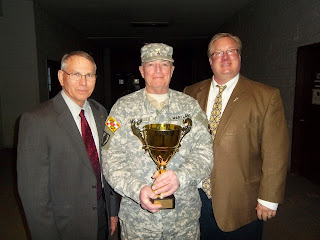
After reviewing the merits of active duty, National Guard, and reserve military units from across the United States, Salute Magazine chose the 10th Medical Regiment for their outstanding contributions to the State of Maryland. Johnny Underwood, Manager of the GEICO Military Department commented that, “The professional medical and mental health support the 10th Medical Regiment provides to the residents of Maryland through the Maryland National Guard is truly extraordinary.” “Their superior volunteer service augments existing state and federal health resources that support our troops, which makes them very deserving of this honor.”
Brig. Gen. (MDDF) Stanley L. Minken, shared that “The 10th Medical Regiment works extremely hard to serve the citizens of Maryland and we are very appreciative to receive this national recognition.” “The unit learns from each mission and works diligently to incorporate those lessons into future missions so that we can always provide the best possible health service whenever we are called.” Salute Magazine is a publication found on United States military installations worldwide and serves as an informational resource for our military personnel. Salute Magazine’s Unit of the Month and Year Program is sponsored by GEICO.
The Maryland Defense Force (MDDF) is the State’s uniformed volunteer military unit providing professional and technical assistance to the Maryland Military Department. Established in 1917, the MDDF consists of nearly 450 personnel who perform legal, engineering, finance, medical, chaplain, field support and ceremonial services for the State of Maryland. For more information: www.mddf.maryland.gov.
Maryland Defesne Force Public Affairs
18 March 2014
Salute Magazine has decided to honor the Maryland Defense Force’s 10th Medical Regiment as their 2013 Unit of the Year. This prestigious honor follows the 10th Medical Regiment receiving the Unit of the Month Award for the April-May 2013 issue of Salute Magazine. Winning a unit of the month award automatically entered the 10th Medical Regiment into the unit of the year contest.

After reviewing the merits of active duty, National Guard, and reserve military units from across the United States, Salute Magazine chose the 10th Medical Regiment for their outstanding contributions to the State of Maryland. Johnny Underwood, Manager of the GEICO Military Department commented that, “The professional medical and mental health support the 10th Medical Regiment provides to the residents of Maryland through the Maryland National Guard is truly extraordinary.” “Their superior volunteer service augments existing state and federal health resources that support our troops, which makes them very deserving of this honor.”
Brig. Gen. (MDDF) Stanley L. Minken, shared that “The 10th Medical Regiment works extremely hard to serve the citizens of Maryland and we are very appreciative to receive this national recognition.” “The unit learns from each mission and works diligently to incorporate those lessons into future missions so that we can always provide the best possible health service whenever we are called.” Salute Magazine is a publication found on United States military installations worldwide and serves as an informational resource for our military personnel. Salute Magazine’s Unit of the Month and Year Program is sponsored by GEICO.
The Maryland Defense Force (MDDF) is the State’s uniformed volunteer military unit providing professional and technical assistance to the Maryland Military Department. Established in 1917, the MDDF consists of nearly 450 personnel who perform legal, engineering, finance, medical, chaplain, field support and ceremonial services for the State of Maryland. For more information: www.mddf.maryland.gov.
Subscribe to:
Posts (Atom)

 Posts
Posts

